
Content

What Is the Role of Dinner?

The role of dinner is to provide minerals and fatty acids from whole plant foods.

  • Fruit is the primary source of calories and vitamins.
  • Vegetables are the primary source of minerals.
  • Nuts, seeds and fatty fruits like avocados are the healthiest sources of fat.

Since fats stay in the digestive tract for the longest time, fatty foods go in the last meal of the day. This way, the digestive tract has enough time to process them before some new food goes in.

Since vegetables have very few calories, not enough to satiate the average person, we add some semi-sweet or citrus fruit to the dinner, in order to get a calorie-satisfying meal.

A nice introduction to dinner is citrus juice, such as… pomegranate juice served in a wine glass.

Order a pomegranate press HERE.

In the picture: A pomegranate press next to juiced citrus fruit peels and two wine glasses full of pomegranate juice

Easy-To-Digest Veggies Vs. Hard-To-Digest Veggies?

There are several ways to classify vegetables into different categories according to certain characteristics, such as: macronutrient content, water content, fibre content, mineral content, colour, which part of the plant they represent.

For our purposes, we will divide vegetables according to how easy or hard it is to digest them. Please note that this is my subjective and free division that I believe makes sense, especially for the topic of this video.

  • Soft leafy vegetables – vegetables that are easy to digest in their raw state: lettuce – butternut lettuce, iceberg lettuce, baby spinach, alfa-alfa microgreens, sunflower microgreens, fenugreek microgreens
  • Botanical fruits – vegetables that are easy to digest in their raw state: tomatoes, cucumbers, zucchinis, bell-peppers
  • Starchy vegetables – vegetables that are hard to digest in their raw state: potatoes, sweet potatoes (yam), butternut squash, pumpkin
  • Cellulose vegetables – vegetables that are hard to digest in their raw state – divided into three subcategories:
    Hard leafy vegetables: kale, ripe spinach, chard, celery
    Cruciferous vegetables: cauliflower, broccoli, cabbage, Brussels sprouts
    Root vegetables: carrots, beets, celery root, radishes, onions
Two tables showing two categories of vegetables according how easy or hard it is to digest them. The table on the left side of the picture is showing easy-to-digest vegetables, and the table on the right side of the picture is showing hard-to-digest vegetables.

In the picture: Easy-to-digest and hard-to-digest vegetables

Nutrients in Hard-To-Digest Vegetables

My personal practice: I almost never use any hard-to-digest vegetables in my diet. Sometimes I prepare some of those hard-to-digest vegetables using certain culinary techniques, but most often I consume easy-to-digest vegetables.

Of course, I am very happy to make green juices from hard greens and celery, as well as carrot juice.

  • But even those hard-to-digest vegetables contain many nutrients… Aren’t we missing out on all those nutrients if we don’t eat all the vegetables?

The fact that some vegetable, or any food for that matter, has nutrients, does NOT mean that your body can absorb and assimilate those nutrients. When some food enters the mouth, it does not mean that it will also enter the cells.

All plants contain nutrients in all their parts, because these nutrients are the building blocks of plant tissues. These nutrients are found in plants primarily for the life of the plant itself, not to be food. Plants lock up their nutrients – the building blocks of their plant tissues – to defend themselves, to save nutrients for themselves.

The point is not to forcefully try to get nutrients from food that is not suitable for our digestive system. Rather, the point is to eat those very foods in which nutrients are available to us. That is food that suits our digestive system, so our bodies can easily absorb and assimilate the nutrients from that food.

Basically, for dinner, we prepare easy-to-digest vegetables in a dressing that contains some source of fat: either nuts or seeds or avocado.

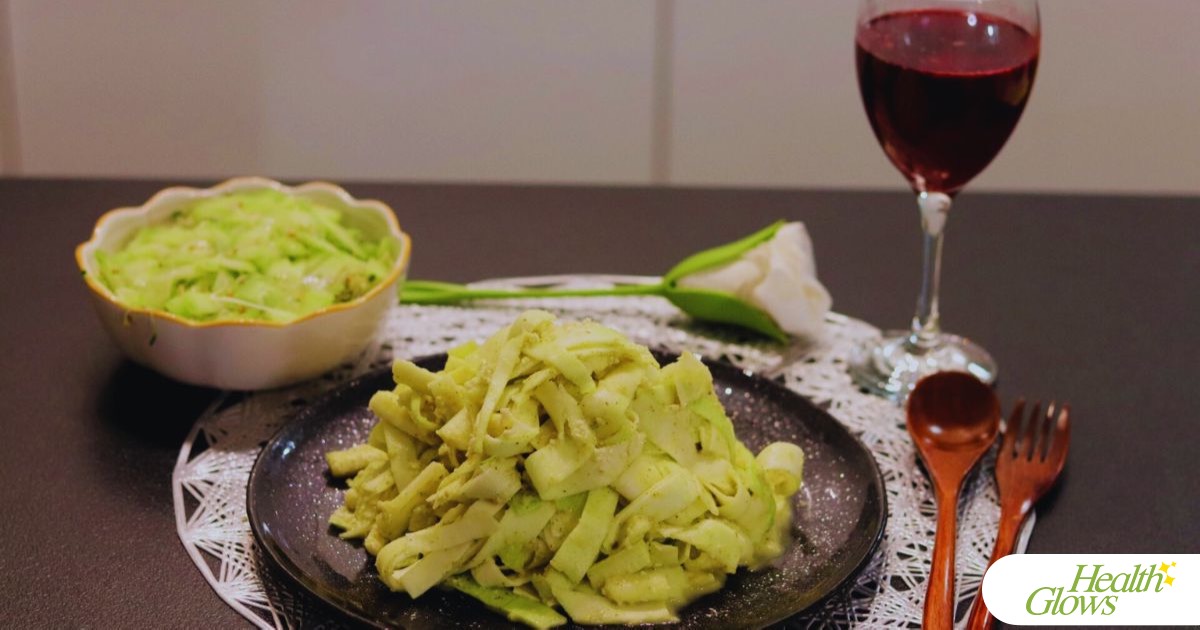
Plate with raw vegan mac and cheese, wooden fork and spoon, bowl with a cucumber-microgreen salad, wine glass with pomegranate juice, napkin in decorative tulip holder, silver table mat, black table.

In the picture: A raw vegan dinner – pomegranate-orange juice, raw vegan mac and cheese, cucumber-fenugreek-microgreen salad

How Much Nuts/Seeds/Avocado To Eat?

Fatty foods should be eaten in moderation. A lot of dietary fat hinders digestion and all the processes that take place in the intestines and bloodstream. Between 1 and 2 oz / 30 and 50 g of some nuts or seeds, or half an avocado is an adequate amount of fatty food per day for the average person.

Two pictures, both show a white ceramic jug with pesto sauce. The left picture is taken from above, and the right picture from the side.

In the picture: A jug with raw vegan pesto sauce

Standard Diet Vs. Raw Vegan Diet

Now we are going to compare the nutrient profiles of my raw vegan dinner from this blog post, and a standard dinner. We compare the same caloric value of 700 Cal.

A raw vegan dinner example consists of:

  • 1 glass of pomegranate juice and half a glass of orange juice
  • Raw vegan mac and cheese
  • A cucumber-fenugreek-microgreen salad

The nutrient profile of this raw vegan dinner:

  • 700 kCal of which: 116 g sugars, 23 g fat and 27 g protein
  • 259 mg of vitamin C
  • About 1.7 l of water

A standard dinner example consists of:

  • 1 glass of wine
  • 11.5 oz / 327 g of standard mac and cheese

The nutrient profile of this standard vegan dinner:

  • 700 kCal of which: 54 g sugars, 25 g fat and 20 g protein
  • 0 mg of vitamin C
  • Almost half a liter of water

I would like to draw your attention to the fact that this standard dinner also contains alcohol. Alcohol is a cellular killer, meaning it destroys every cell it comes in contact with, including brain cells.

While the pomegranate juice that I serve as an aperitif in a wine glass contains 0% alcohol, it still looks beautiful in a wine glass, it is delicious and healthy.

Also, notice that when you eat cheese, you get sticky saturated fat and cholesterol that makes both of your lymph and blood fatty. This conditions puts all arteries and organs at risk, including the brain and heart.

Vegetables and fruits also contain small percentages of monounsaturated, polyunsaturated and saturated fats and negligible cholesterol content. Those small amounts of fat are preferred in their raw state. Heating fats is problematic because when fats are heated, they become sticky and carcinogenic.

Tables showing the nutrient profile of a raw vegan dinner example.

In the picture: Nutrient profile of a raw vegan dinner example

Tables showing the nutrient profile of a standard dinner example.

In the picture: Nutrient profile of a standard dinner example

Raw Vegan Dinner Ideas & Recipes

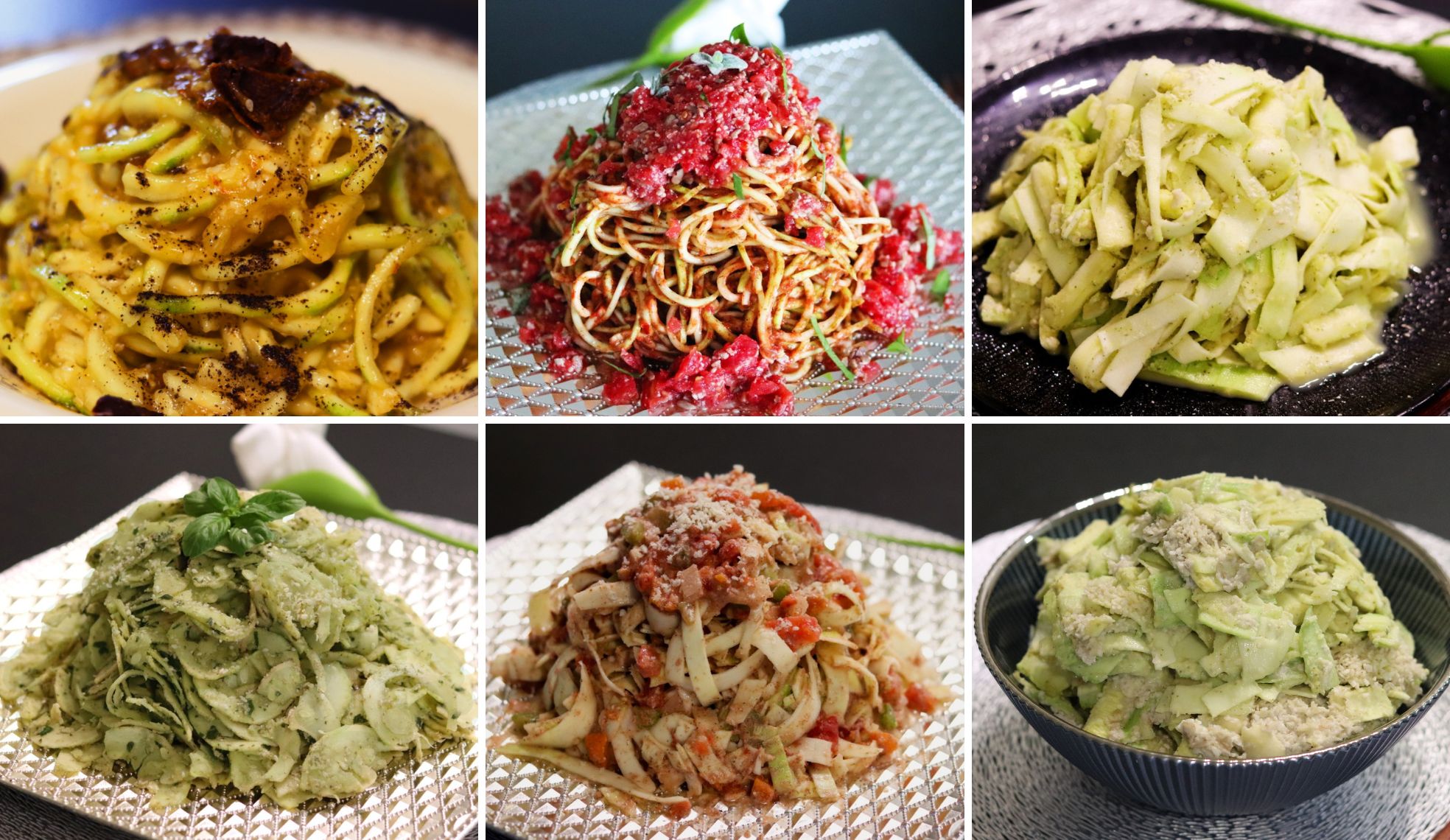
To get ideas for delicious and healthy raw vegan dinners, I invite you to my free Raw Vegan Pasta Recipes online course.

Six images in two horizontal rows. Each image shows one raw vegan pasta dish made after the original pasta recipe. Six different raw vegan pasta recipes: spaghettoni carbonara, spaghetti marinara, fettuccine Alfredo, fusilli al pesto, tagliatelle Bolognese, mac and cheese.

In the picture: Six different raw vegan pastas from the Raw Vegan Pasta Recipes online course

The Takeaway To Remember

From this lesson in which you learned which food is the best food choice for dinner, remember the most important points:

  • The role of dinner is to provide minerals and fatty acids from whole plant foods.
  • Fruit is the primary source of calories and vitamins.
  • Vegetables are the primary source of minerals.
  • Nuts, seeds and fatty fruits like avocados are the healthiest sources of fat.
  • A healthy raw vegan dinner example would be: citrus juice, raw vegan pasta and a simple salad.
An example of a raw vegan dinner: raw vegan mac and cheese, a cucumber-microgreen salad, pomegranate-orange juice.

In the picture: A raw vegan dinner example – pomegranate-orange juice, raw vegan mac and cheese, cucumber-fenugreek-microgreen salad

Quiz

Marina from Health Glows holding a wine glass full of pomegranate juice in one hand and a plate of raw vegan pasta in the other hand.

In the picture: Marina from Health Glows holding a wine glass full of pomegranate juice in one hand and a plate of raw vegan pasta in the other

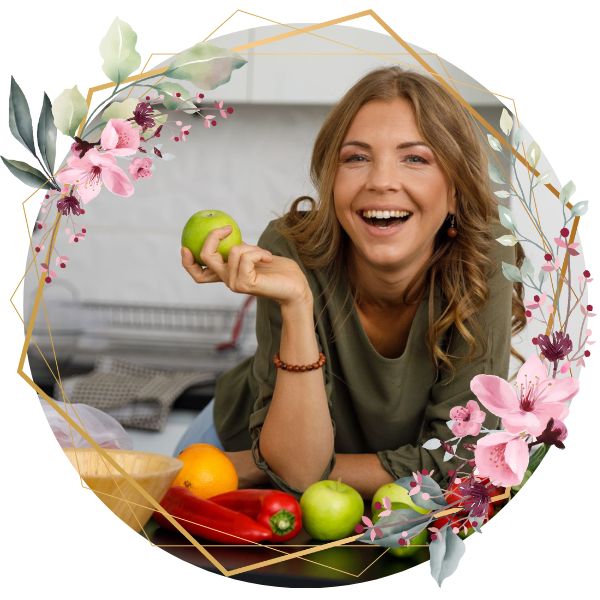
Marina from 'Health Glows' - a certified raw vegan diet and healthy lifestyle coach. Marina helps her clients and followers to transition to a raw vegan diet in a proven and sustainable way, along with incorporating an exercise program for staying fit long term, in order to get rid of health problems and build a high level of health.

Marina from Health Glows

As a certified raw vegan diet and healthy lifestyle coach, Marina helps her clients and followers to transition to a raw vegan diet in a proven and sustainable way in order to get rid of health problems and build a high level of health.

Leave a Reply

The maximum upload file size: 50 MB. You can upload: image, audio, video, document, spreadsheet, interactive, text, archive, code, other. Links to YouTube, Facebook, Twitter and other services inserted in the comment text will be automatically embedded. Drop files here