
Content
- What Is the Role of Lunch?
- Two Types of Fruit Sugar
- Healthy and Unhealthy Sugars
- Why Cucumber and Greens with Sweet Fruit?
- Sugar Is NOT the Cause of Insulin Resistance, Diabetes and Candidiasis
- Why Is a Fatty Diet Problematic?
- Orange Colour Fruit – Rich in Beta Carotene
- Benefits of Consuming Beta Carotene
- Vitamin A Vs. Beta Carotene
- Raw Vegan Lunch Ideas
- The Takeaway To Remember
- Quiz
- Author
What Is the Role of Lunch?
The role of lunch is to provide the most effective and efficient fuel for the body so that the body can easily and effortlessly generate energy for physical and cognitive activities during the day.
The primary and preferred fuel of every body cell is the simple sugars found in whole foods. Thus, the food that provides the most effective and efficient fuel for the body is sweet fruit.

In the picture: Ingredients and equipment for preparing a raw vegan lunch, pictured from above
Two Types of Fruit Sugar
Fruit contains 2 types of simple sugars:
- glucose
- fructose
Glucose from fruit is absorbed directly into the bloodstream without requiring the digestive system to work.
Fructose from fruit, on the other hand, requires a simple digestion process. Fructose is first absorbed from the intestine into the bloodstream, and then transported to the liver via the bloodstream. In the liver, fructose is converted into either immediate consumption fuel or stored fuel.
The immediate consumption fuel is glucose, while the stored fuel has 2 forms: glycogen and fat, depending on the needs of the body at a given moment.

In the picture: Persimmon pudding with cinnamon and thin cucumber slices
Healthy and Unhealthy Sugars
When any sugar – glucose / fructose / sucrose / dextrose or any other – is isolated from a food, and consumed in isolation, then it is harmful or even toxic to the body.
This applies to every isolated macro and micro nutrient. So, protein powders, all oils, vitamin supplements and mineral supplements – all these isolated substances are toxic to the body, because the body can only process whole natural foods.
Sweet fruit contains simple sugars that are bound in the fruit tissue and thus connected with other nutrients that all together make up that tissue: vitamins, minerals, enzymes, coenzymes, water and fibre. In this way, sugar within this entire fruit structure represents a healthy nutrient for the body.
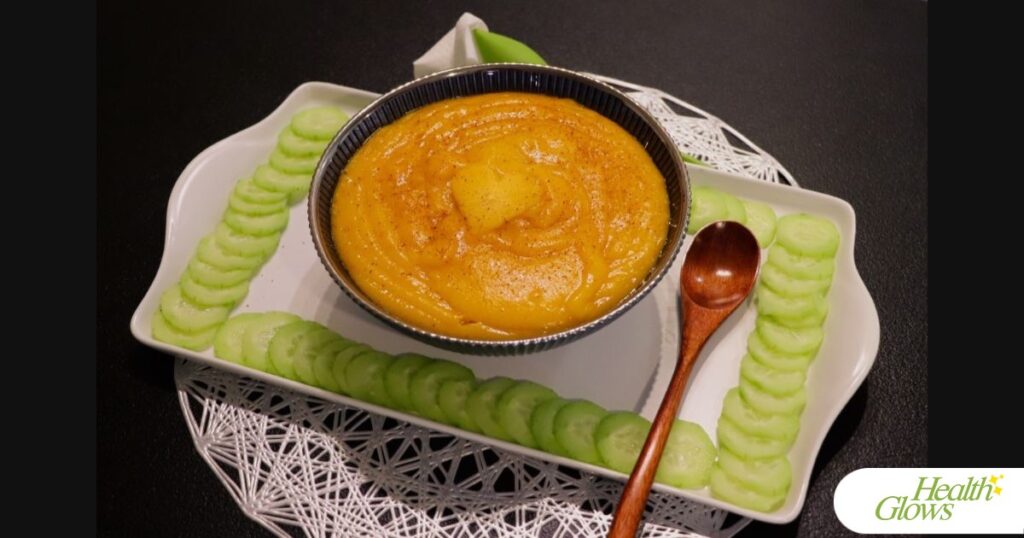
In the picture: A raw vegan lunch example – persimmon pudding and thin cucumber slices
Why Cucumber and Greens with Sweet Fruit?
Adding greens or cucumber to sweet fruit in a meal is a useful addition for several reasons:
- Dietary fibre from cucumber or greens additionally slows down the transfer of fruit sugar from the intestine to the bloodstream, which further slows down and regulates the blood sugar spikes. This is especially helpful for those with insulin resistance.
- Water from the cucumber or greens dilutes the sweetness of fruit sugar, which is useful for those who don’t like very sweet flavours.
- Fibre and water from cucumber or greens contribute to the feeling of satiety, which is useful for those who tend to overeat. And yes… overeating on fruit is NOT a healthy practice. You should eat ENOUGH, but eating excessively and uncontrollably is not healthy regardless of the type of food.
- Minerals from cucumbers or greens help the entire process of food digestion in general, as well as fruit digestion.
Not all vegetables are the same in their composition. This means that not all vegetables are compatible in terms of digestion for combining with sweet fruit.
Cucumbers and young greens are compatible with sweet fruits in terms of digestion because they contain few calories and are very neutral in terms of digestion. As a bonus plus, due to their mineral, fibres and water content, they help digestion in general, including fruit digestion.
Simply put: it is not good to combine all types of vegetables with sweet fruits.
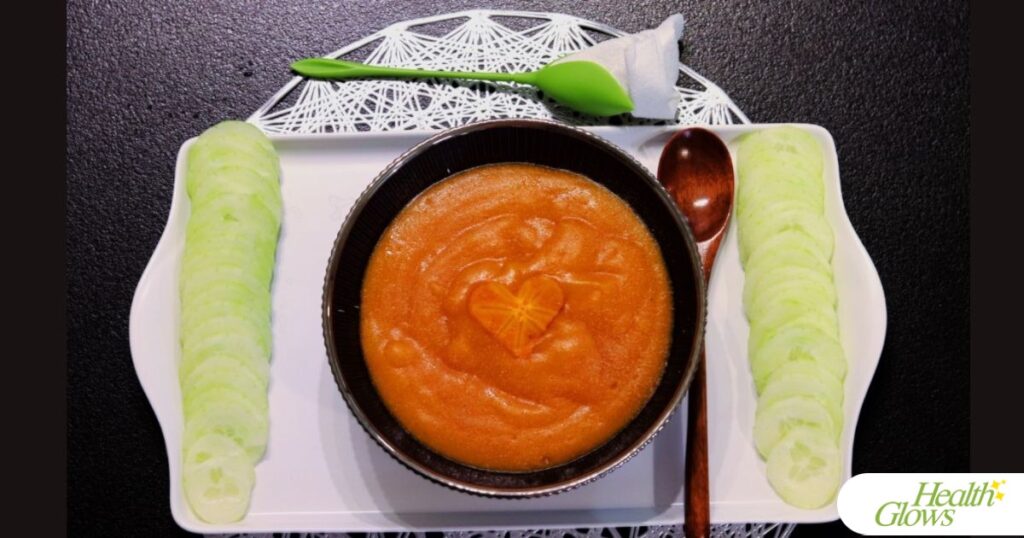
In the picture: A raw vegan lunch example – persimmon pudding and thin cucumber slices
Sugar Is NOT the Cause of Insulin Resistance, Diabetes and Candidiasis
Sweet fruit is NOT, nor has it ever been, the cause of candidiasis, insulin resistance and type 2 diabetes.
Sweet fruits are rich in sugars. Sugars are the preferred fuel of all body cells.
Food rich in sugars is broken down in the digestion process into individual nutrients, some of which are simple sugars. Thus broken down in the digestion process, simple sugars are absorbed from the intestines into the bloodstream. Once in the bloodstream, sugars need to move into the cells.
Fruit sugars need to pass smoothly from the bloodstream into the cells. Once in the cells, sugars are converted into ATP, i.e. the energy, in the mitochondria of the cells.
The problem arises if the bloodstream, insulin and cell receptors for insulin are covered with fat because the diet contains a lot of fatty foods.

In the picture: A raw vegan lunch example – semi-dehydrated bananas with strawberry and dried apple sauce
Why Is a Fatty Diet Problematic?
Fatty foods—regardless of their source, whether from meat, dairy, eggs, or oils—are harmful to the body as they clog the bloodstream. In a fat-clogged bloodstream, insulin cannot function properly, leading to a condition known as insulin resistance. Even raw nuts and seeds, while healthier, should be consumed in moderation because they are also high in fat.
Problems Caused by a High-Fat Diet:
- Blood flow slows down as the blood becomes thick and clogged.
- The transport and delivery of nutrients and oxygen to the body cells are hindered.
- Cells are deprived of essential nutrients and oxygen.
- Insulin struggles to perform its function, resulting in insulin resistance, which can lead to conditions like candidiasis and type 2 diabetes.
- The endothelium (the inner lining of blood vessels) becomes damaged due to the strain of handling thick, sluggish blood.
- A lack of energy and chronic fatigue is experienced.
- Hormonal imbalances and glandular dysfunction may occur.
- It becomes easy to gain excess weight.
Benefits Experienced on a Low-Fat Diet:
- Blood remains fluid and flows freely.
- Nutrients and oxygen are efficiently delivered to all cells.
- Cells receive the nourishment and oxygen they need.
- Insulin functions effectively.
- Insulin resistance, candidiasis, and type 2 diabetes are no longer a concern.
- Blood vessel walls stay elastic and healthy, as they carry smooth, light blood.
- Energy levels are high, and a sense of vitality is felt.
- The hormonal system remains balanced and healthy.
- Maintaining a healthy body weight becomes much easier.
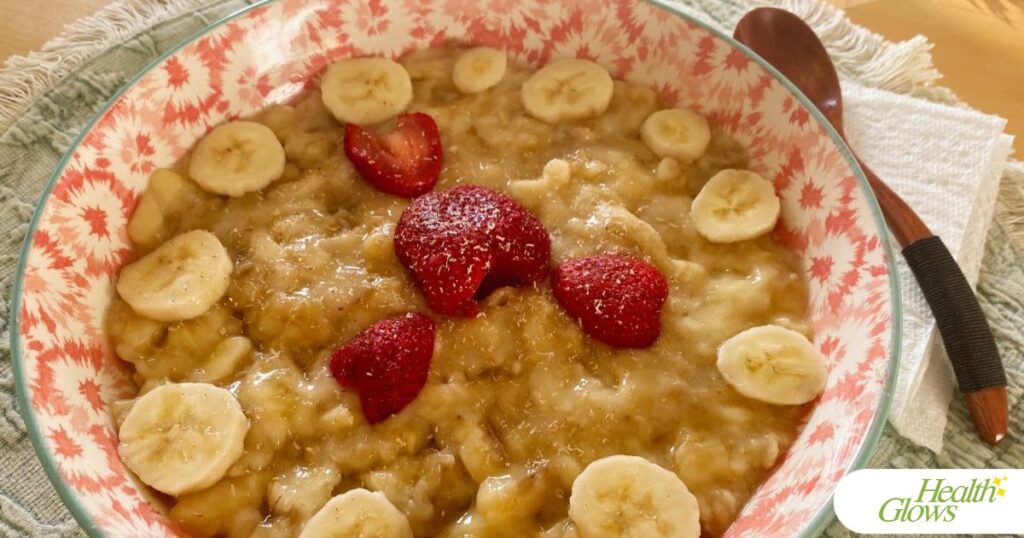
In the picture: A raw vegan lunch example – mashed banana and strawberry porridge spiced with freshly grated nutmeg
Orange Colour Fruit - Rich in Beta Carotene
Beta carotenes are antioxidants in plants that give plants their yellow, orange and red colours.
When you see an orange fruit, let your first association be – beta carotene.
But… there is a golden rule that many people are not aware of.
Have you heard how it is often said: Carrots are good for your eyesight! (because carrots are orange, and the orange colour indicates the presence of beta carotene) ?
The orange colour of carrots really indicates the presence of beta carotenes in carrots. However, just because some nutrients are found in some food, it does NOT mean that the human body can absorb and assimilate the nutrients from that food.
The human body can digest only those foods that are suitable to the human body digestive system.
Just for example, carrot is a root. The human body digestive system cannot digest roots.
Fortunately, there are many orange fruits that the human body digests much better than carrots, so it gets more beta carotenes from orange fruits.
A raw vegan lunch example in winter – 680 kCal (about 1 kg of persimmons) of persimmon pudding gives about 780 micrograms of beta carotenes, which the human body absorbs and assimilates very effectively.
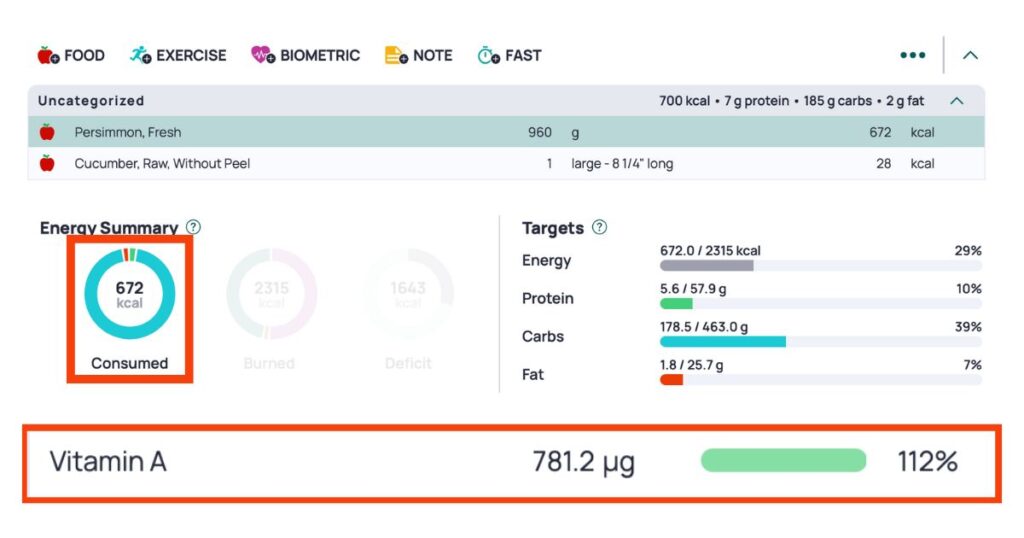
In the picture: Nutrient profile of persimmons with emphasis on beta carotene content in persimmons
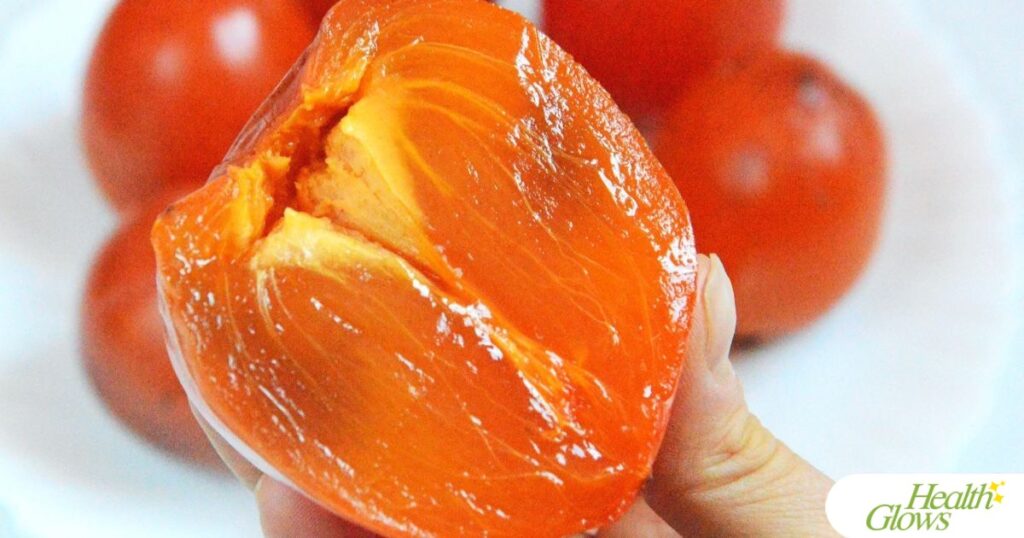
In the picture: An opened persimmon half of intense orange color
Benefits of Consuming Beta Carotene
Beta carotenes are antioxidant (protective) substances in plants that give plants their yellow, orange and red colour.
The human body converts beta-carotene from fruits and vegetables into vitamin A.
Vitamin A (converted from beta carotenes!!!) is an important substance for the proper functioning of the body.
Beta Carotenes – Good for Your Eyes
Retinol (a form of vitamin A) combines with a protein called opsin to form rhodopsin, a pigment in the retina that helps the eyes see better in the dark.
Vitamin A helps maintain good eye health, as it prevents drying (xerophthalmia) of the cornea and conjunctiva.
Beta Carotenes – Good for Your Skin
Vitamin A helps cells develop into specialised cells for certain tissues and organs.
Vitamin A regulates keratin production and helps wound healing.
Beta Carotenes – Good for Children
Vitamin A helps bone development in children.
Vitamin A is extremely important for the development of the embryo during pregnancy, especially in the formation of organs and limbs.
Beta Carotenes – Good for Your Reproductive System
Vitamin A helps in sperm production in men.
Vitamin A helps in the development of the fetus in pregnant women, including the development of the eyes, heart and nervous system.
Beta Carotenes – Good for Your Cells
Beta carotenes are antioxidant substances in plants. This means that beta carotenes have a protective role – they protect cells from oxidation that can be caused by free radicals.
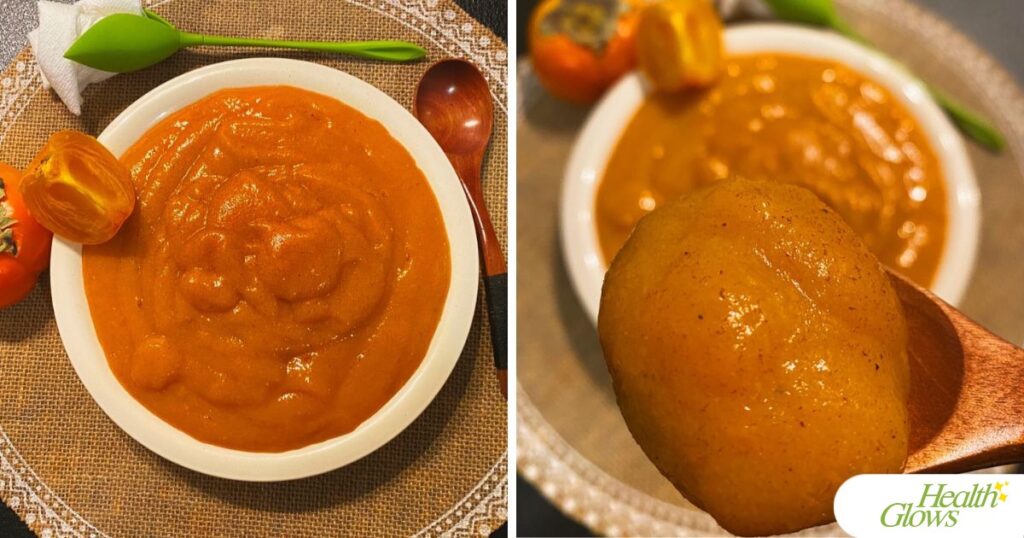
In the picture: Persimmon pudding
Vitamin A Vs. Beta Carotene
Beta carotenes are antioxidant substances found in plants. Plants that contain significant amounts of beta carotene are recognised by their intense yellow, orange and red colours.
When you consume fruits that are rich in beta carotenes, such as:
- Persimmons
- Mangoes
- Apricots
- Watermelons
- Papayas
- Melons
and other yellow and orange fruits, your body absorbs beta carotenes from the fruit and converts it into vitamin A when necessary.
- Why when necessary?
Because your body protects you from the toxic accumulation of vitamin A in your body.
Vitamin A is a fat-soluble nutrient. Thus, when there is more vitamin A in your body than is needed at a given moment for body functions, that excess vitamin A is stored and accumulates in your fatty tissues and liver. Accumulation of vitamin A in the body is toxic.
Your body very effectively regulates the conversion of beta carotenes from plants into vitamin A. However, if you consume direct sources of vitamin A, your body does not have a mechanism to expel this excess vitamin A. This leads to the accumulation of vitamin A in your liver and fatty tissues which is toxic.
Direct vitamin A (in a form called retinol) sources are:
- liver
- fish
- dairy products (milk, cheese)
- eggs
All these foods are therefore toxic to the human body.
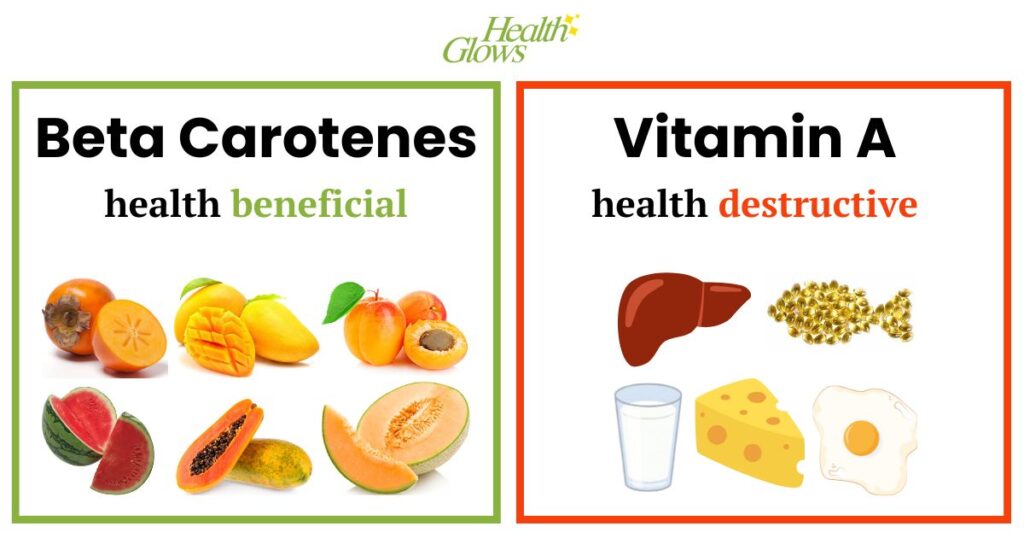
In the picture: The table on the left side of the picture shows plant sources of beta carotene, and the table on the right side of the picture shows animal sources of vitamin A
Raw Vegan Lunch Ideas
As this blog post and accompanying video were written, or rather filmed, in November, here you can see a raw vegan lunch example that is typical for the winter months in Europe: persimmon pudding and cucumber slices.
Of course, persimmons, when fully ripe, are perfect to eat as they are, there is no need to blend the food. But I personally love persimmon pudding, so persimmon pudding is my daily lunch during the season of this heavenly fruit.
Throughout the year, therefore in different seasons and in different locations around the world, we have, logically, different raw vegan lunch examples. But you should know the unchangeable rule: the healthiest raw vegan lunch food is always the sweetest fruit in the given season and location with cucumbers or lettuce.
Other examples of raw vegan lunches are:
- Bananas
- Mashed bananas and strawberries spiced with freshly grated nutmeg
- Banana and strawberry ice cream spiced with ground anise
- Semi-dehydrated bananas with strawberry and dried apple sauce
- Grapes
- Figs
- Mango
- Dragon fruit
- Jackfruit
Or whatever sweet fruit you choose.

In the picture: Six different raw vegan lunch ideas
The Takeaway To Remember
From this lesson in which you learned why sweet fruit is the best food choice for lunch, remember the most important points:
- The role of lunch is to provide the most effective and efficient fuel for the body.
- The primary and preferred fuel of every body cell is the simple sugars found in whole foods.
- Isolated sugars are harmful to health, but the sugar inside the whole sweet fruit is a healthy nutrient for the body.
- A healthy lunch consists of sweet fruit along with some cucumbers or greens.
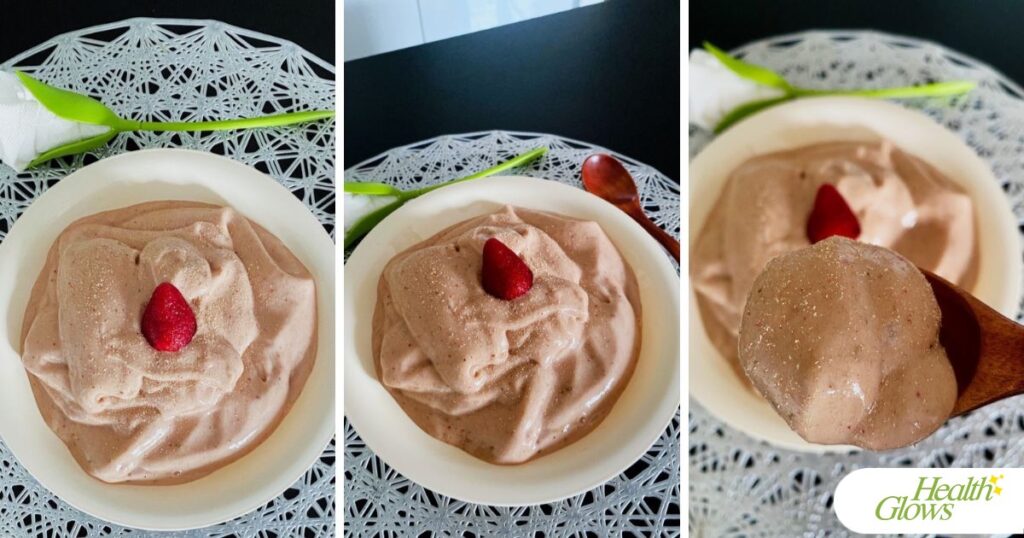
In the picture: A raw vegan lunch example – banana and strawberry ice cream spiced with ground anise
Quiz
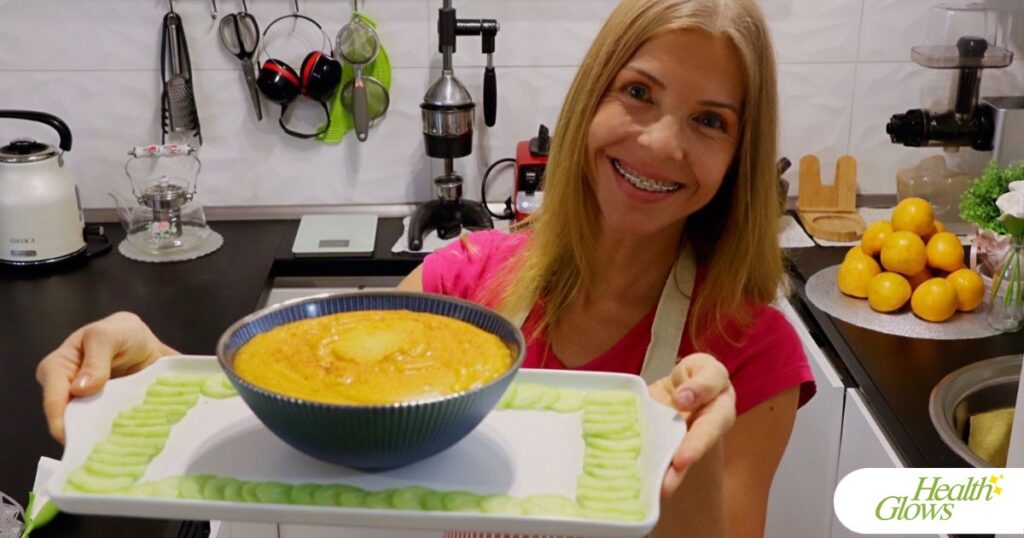
In the picture: Marina from Health Glows holding a tray with a persimmon pudding bowl and thin cucumber slices
Marina from Health Glows
As a certified raw vegan diet and healthy lifestyle coach, Marina helps her clients and followers to transition to a raw vegan diet in a proven and sustainable way in order to get rid of health problems and build a high level of health.
Thank you Marina – the lunch looks creamy & delicious
Do you eat any fats like avocado , nuts or seeds for natural fat sources for the body ?
Hi dear Michelle!
Thank you for your kind comment. I am glad you like my lunch example.
Great question. Yes, I do – in my dinner. Coming up in the next lesson for you “Raw Vegan Dinner”.